Thursday, August 28, 2014

"We are each other's keeper"

Day 10 in Ghana...

Ghana? Yes, Ghana. So I’m in West Africa? Yes... finally?

This is how my mind has been working lately. I am here: I see the people, smell the smells, taste the food, and see the array of incredible things there are to see... but what do I feel? That’s been an interesting concept; I think I will come back to that in another blog post.

While it’s been less than 2 weeks since I’ve blogged, a lot has happened! Just that things are finally happening is an excitement in itself! We’ve been waiting so long for arrival in country, and here we are! But what have we been up to? Rather than just list events, I have found myself casually recording intriguing quotes by key persons over the past week and a half, so I will “reflect” with them.

“We are each other’s keeper”
~Mark, our awesome cultural and language trainer (who is also a pastor)

Ghana is so culturally different from the US: People smile and greet people. You feel safe around people you’ve just met. You are comfortable asking anyone for help, because they will help you. Kids run around the streets because other parents are watching them. Goats are frequent...

But really, people care about each other. They want us to feel at home. They offer up generous yet not overbearing services and kindness to welcome us. They care for each other in genuine and visible ways. I already can tell I will love the people here, which is great because people are what make cultural and international experiences so incredible!

 “YƐ frƐ me Akosua, me firi Pennsylvania wƆ Amerika.”
~Me, introducing myself in Twi; translated: My name is Akosua, I am from Pennsylvania in America.

We have been learning Twi, the predominant language in Ghana and you can BET I am SUPER EXCITED to use it to incorporate with the people! It really is not that difficult of a language so far, with only 2 unique letters and a few non-phonetic spellings. We had 3 intense days of training and I will definitely be learning from my host family shortly...

Oh, and Akosua is not Allison in Twi. Here, people take a general, gender-specific name that reflects the day of the week you were born. I was born on a Sunday and I am a female, so I am Akosua (along with 1/7th of all Ghanaian women).

“4-H is a concept, it can be used for any organization”
~Regional 4-H director, giving training on how to start a 4-H club in an area

I found this to be a humbling ideal for development work – we don’t need to brand everything. 4-H is doing great things. When we get to our communities and have the opportunity to add 4-H esque concepts to an existing youth organization, we should do it!

AgriCorps is officially collaborating with 4-H Ghana for our year or service. This is pretty exciting, as 4-H Ghana is doing a fabulous job so far at creating positive change. However, they are only working in 2 of the 10 regions (provinces/states) of the country. We are focusing on one of the existing regions to further the reach of the current, “hub,” programs to surrounding rural communities. Given their strong foundation, we will be able to make a more sustainable impact than in Liberia, where all that we would have done would have been new and exciting, yet perhaps not as acceptable to the post-conflict culture. (P.S. keep praying for Liberia, it’s bad.)

We will be working with existing club advisers and 4-H enterprise gardens to improve practices, develop the youth leadership components of the clubs, and reach out to the homes with improved home entrepreneurial projects. More of this to come...

“What you do is just build on what they have – that’s where the magic is.”
and
“If we see you as part of us, it is easier for us to get what you have.”
~Eric, Eastern Region Public Relations Officer for the Ghana Education Service, speaking about the standards used for teaching and working in schools in Ghana

I will leave you to pick through these quotes yourself, and I will use them to dig into the entire concept of our being here and what my year will actually look like!

Ghana is actually a hub for development organizations. As one of the more developed West African countries, the development work seems to have been paying off. With that said, Ghanaians are still incredibly excited to see us, invite us in, and have us help them. Recently, an agricultural extension director from another district actually seemed upset that none of us would be placed in her district. In my mind, development is a positive thing, but feeling as though you need it and actively seeking out an oboruni (“foreigner” in Twi) to help you is not something I would expect. Then again, Ghanaians do not have the sort of American pride I am accustomed to. So, it has been refreshing to feel so “desired.” Nonetheless, I need to keep humbling myself with the truth that I do not have all the answers, for many of them already lie in the mind of these wonderful people with whom I will work. All I must do is “shut up and listen” (another quote, this one from a Ted talk we watched during reflections last week).

Well, there has been some more exciting news with all of this training and preparation. We finally learned where we will be stationed!!!!!

I will be living in the small town of Oseim, located in the Eastern Region of Ghana. This town is about 40 minutes north of Koforidua, the capitol of the region and headquarters for 4-H Ghana. I am going to be working with a decently large and developed 4-H program in the Savior Junior High School, a 3-year school of about 250 students.

The most exciting piece of my entire time in Ghana so far is that I got to SEE my town and school already! Part of our training included a visit to a local program and “4-H meeting” and it just happened to be mine! We even chilled out at my host family home for an hour before the 4-H meeting as we waited for the downpour of rain to stop (something that prevents much from happening here).

I am really pumped. But still a little “bleh” overall – I am not sure what to feel. We have seen awesome things so far. Last week, when we arrived, we toured some cool areas in the capital city of Accra. Then we got to stay in a pretty nice hostel in Koforidua for training. Now we are in another town for agricultural training. Next week we get to do a 4-5 day “site visit” to gather data about our towns and move in. Then, after a few days reflection, we begin. We begin? Hmmm, what does that mean? I am still not sure, and I am still figuring out how to feel about it. Nonetheless, I am content with where I am and I am learning new things daily.

"Life is now, and so it shall continue to be as it goes on. I will continue to embrace it as it comes."

Akyire yƐbƐhyia (pronounced “eh-sheer-ey yeh-bey-shia”)!

See you later! 

(sorry for lack of photos - the internet is prohibiting that kind of data upload right now... hopefully soon!) 

Friday, August 15, 2014

Wait, we leave tomorrow?

WOHOOOOO I finally get to get on a plane and leave the country - TOMORROW!

While I have been learning a LOT about contentment over the past several weeks, I (and my entire team) am SO ready to get moving to West Africa and get on the ground in our villages. While I still don't know what village I will be working in, I know we will be in the "Eastern region" which is the area to the east and south of the giant lake Volta (largest man-made reservoir in the world). We will arrive on Sunday night after a flight to Amsterdam (and hopefully some "outside" time during our 7 hour layover there), then we have 2 days in the capital city (Accra) before moving to our region for cross-cultural training.

What has happened in the last week? Well... a lot. But it has been great. After a week of work and learning at the ECHO farm in Fort Myers, we had a nice day off on Saturday - so, being in Florida and all, we of course went to the beach.


Then we drove to Gainesville on Sunday - did you know I lived in Gainesville for 8.5 years? My mother worked at the University of Florida for those years between being born and (currently) residing in State College, PA. So to majority of my childhood occurred in that humid college town! It was weird being back under these circumstances, but nonetheless refreshing to visit my favorite childhood restaurant (Sonny's BBQ) and even SEE MY CHILDHOOD HOME (which is for sale if anyone is interested)!

The best BBQ restaurant ever. 
On Monday, we presented our agricultural lesson plans to some AEE faculty and PhD students at UF - in the same building my mom used to work in! Talk about deja-vu... it was a great experience and a wonderful opportunity to meet with (or re-unite with) the outstanding faculty at UF. We also got great teaching tips to take with us to Ghana!

My mom's old building - where we spent Monday morning

Lesson practice!

It was fun to have some of the experts serve as students for activities... 
Monday afternoon and Tuesday afternoon we were occupied with preparations for and execution of a "leadership day" at the Boys and Girls Club. Again, I experienced some flashbacks, as I had spent some of my summers at this exact club (not very fond memories, mind you) in NW Gainesville. However, we got some good "facilitation" experience with the group of about 30 kids, ages 10-14. While they went a little crazy and were hard to handle and several of us left very frustrated, I was pleased to get the chance to interact with them and love on them, as several of those youths come from low SES or struggling backgrounds. Also, working as a counselor for the YMCA day camp for 4 years probably left me with a greater patience level for these kids...

Tuesday night was a lovely evening with some great people - Lisa Heinert is a member of the AgriCorps board, and her husband, Seth, is a UF AEE PhD student. Their adorable 4-month old son, David, has been of great stress relief and comfort to us (they were present at the training in East Texas a few weeks ago), so I am glad I got to spend some time with all of them at dinner on Tuesday.

David is not angry - he just has the funniest facial expressions of any baby I have ever seen... he seems so mature in how he looks at the world! 
Wednesday morning we had some medical and safety training from a former Peace Corps medical officer (who happened to work in Ghana) before hitting the road! After 8 hours of driving, we arrived in our slightly planned mid-point overnight spot - New Orleans. It was a first time visit for 6 of us, so we wanted to be sure to see the city. It was quite an interesting night - there are very interesting folk in New Orleans, and Bourbon street is a fun place! Nonetheless, we got to unwind a bit after some crazy transitions. Then, on the road again to arrive in Dallas last night!

Melissa and Dustin were in as much need of a night off as I was! Note: Courtney in the background :) 

Twilight view of Bourbon Street, New Orleans!
While I love this group of people dearly, I needed some "away" time after 21 straight days in this group - and thankfully I get to see a friend tonight. She is living and working in Fort Worth and she is going to take me touring around Dallas tonight!

I am definitely ready to get on that plane tomorrow... but I am so thankful for the last several weeks of crazy travel, learning, and fun! It almost doesn't feel like we are leaving tomorrow - I have been so content just 'being' that it hasn't become a reality in my mind that we will be in a village, teaching, within the next few weeks... This year of service is not at all what I've expected it to be so far, but it has nonetheless been a great time for personal growth and new experiences - even if we still are in the U.S.

Let's just say that the inaugural group of AgriCorps will most likely never, ever be duplicated in their experiences...

With love from Dallas!!

Friday, August 8, 2014

Pondiferous moments

Pondiferous: (adj) to ponder, mull over, consider, or discuss; usually of deep philosophical context (but does not have to be)
(Word credit: Courtney Angel, 2014 AgriCorps member)

Today would have marked a week of being in Liberia... but we are not in Liberia. We are in Florida (similar climate, severely different culture).

Today also marks 2 weeks of being with my AgriCorps team: learning, traveling, laughing, dancing, living. I have learned much over the past 2 weeks: whether it is learning about the lives of those who I am with, how to cope in unique situations, about tropical agriculture, how to make a trellis, or simply learning how to be content... we'll ponder contentment a little later.


So here I am in a lovely guest house on the ECHO Global Farm property in Fort Myers, Florida. After 2 full days of driving from Dallas, we arrived on Sunday evening to two spacious guest houses with full kitchens - lots of space to spread out (we all got our own rooms after being squished in an apartment and hotel rooms for 4 nights!). We definitely needed some decompression time, but then we got to jump right in to a week full of learning and fruitful labor! While here at the farm, we've been able to attend a daily seminar/lecture about some aspect of global agriculture/travel. Topics have included: nutrition, problems in tropical ag development, cultural immersion, underutilized crops, appropriate technology, and a few more. Our composition note books are filling up with lots of useful information.

Appropriate Technology talk - these are Rocket Stoves!

A rice hull cooker - super hot and efficient

Carpet gardens - using wicking technology in an "urban" setting
In addition to great talks, we got to work with the ECHO interns around the farm over the past several days. On Tuesday, I was given a machete (yes, I have been waiting a while for this, please see former machete post) and asked to take down some past-production banana stalks. Talk about using built-up energy! After chopping apart 2 full grown stalks, we helped sort seeds in the seed bank before lunch... I have a new found respect for white sesame seeds. Wednesday's labor included building a trellis from bamboo stalks - Leah and I may have struggled a bit, but we eventually got one up! Then yesterday was "farm day" where all the interns and some employees break out to do weekly farm tasks - Cassella and I worked with an intern and volunteer to move over 100 cinder blocks from one location to another to disassemble and set up shade garden tables... talk about full body pain... it was good hard work!

Everyone got to partake in the sesame seed sorting due to the thunderstorms :)

Fenangling a trellis together with Leah for Loofah plans!

The final product! Please do not lean, climb, or blow on the trellis. 
Other than the pain that can ensue from literally carrying around a ton of bricks, we have been having a great time so far. Today is a work day to catch up on our "assignment" of developing 3 full lesson plans (each) of relevant content for west Africa - a great thing to have to do when in walking distance of one of the best tropical agriculture libraries in the U.S.!! While I do have some lesson planning experience, this will be a good refresher and means of learning a bit more about the agriculture I will have to experience.

Tomorrow will be a good "down" day - we're going to a local beach for the day :) Maybe get to see a nice Florida sunset like this one I caught on our way down here...


THEN, on Sunday, we will be traveling up to my ex-hometown, Gainesville!!!


We will be working further on our ag education background and teaching experiences by teaching one of our lessons to some Ag Ed faculty and PhD students at the University of Florida! I am excited to see Gainesville again, as I haven't been there in over 10 years, and I am super excited to tap into the great AEE resources at UF!

On Wednesday and Thursday we will travel back to Texas to prepare for our DEPARTURE TO GHANA!!! Yes, we are leaving next weekend - we will fly out of Dallas on Saturday, August 16 with just one layover in Amsterdam before arriving in the capital city of Accra!

Now for some reflective and pondiferous writings...

Has it sunk in that we will be in Ghana in 9 days? No, not really... but that probably has something to do with all the craziness over the past 9 days. Just 9 days ago, we were expecting to be leaving shortly for Liberia. Meanwhile, the whole world is freaking out about Ebola virus - something that was still not of concern to us due to our non-affiliation with medical places. However, I was feeling pressure from my family and friends about the situation and their discomfort of us going (and my team mates also felt said pressure). I was torn for several days - trust our AgriCorps leadership with wise decisions (which were still pointing to Liberia) or avoid the uncomfortable situation of causing constant anxiety for my family... thankfully I didn't have to choose between the two, and thus began the crazy change in plans/places. Let's keep this organized:
  • Morning of Tuesday, July 29 - we still thought we were leaving for Liberia on Thursday
  • Evening of Tuesday, July 29 - we were told departure was delayed 2 weeks to assess Ebola situation
  • Evening of Thursday, July 31 - we were told we were going to Ghana instead of Liberia
  • Thursday and Friday nights - all of us share a 1 person apartment (with sufficient floor space) before roadtripping 
  • Morning of Friday, August 1 - we were told we leave the following day to drive to Florida for a week at the ECHO farm
  • Saturday and Sunday, August 2 and 3 - drive to Fort Myers, Florida with a stop in Mobile, Alabama
  • Monday to Wednesday, August 4-6 - work at ECHO farm with no knowledge of the following week's plan
  • Wednesday, August 6 - we were told our plans for the following week: Gainesville, drive home, fly out Saturday the 16th 
  • TODAY, Friday, August 8 - I think we now know how its going to look... at least until we get to Ghana... 
As you might imagine, all of these changes, transitions, and places of residence could easily frustrate and irritate our team... however, I feel blessed to be in a group that is so flexible and mature at handling the situation. I personally have been learning more and more about what it means to be content. 

No, I don't picture myself in Ghana in less than 2 weeks. Yes, I am enjoying where I am right now. Yes, I get frustrated at times, but it passes quickly. Yes, I am living in contentment. 

Paul sums it up pretty well in this letter of his to the Philippians: "Not that I am speaking of being in need, for I have learned in whatever situation I am to be content."

But to place that verse in context, I will leave you with the whole passage - one that reflects the struggles that will continue over the next year... and ending in the verse that will hopefully find true meaning in my life in Ghana.

[Philippians 4:10-13]

10 I rejoiced in the Lord greatly that now at length you have revived your concern for me. You were indeed concerned for me, but you had no opportunity. 11 Not that I am speaking of being in need, for I have learned in whatever situation I am to be content.12 I know how to be brought low, and I know how to abound. In any and every circumstance, I have learned the secret of facing plenty and hunger, abundance and need. 13 I can do all things through him who strengthens me.
Just as an added bonus, here are a few shots from a hiking path I found this morning at a local nature preserve.


Until next week (or until something drastically changes again) - I'm signing off for a nice relaxing day at a Florida beach :) 

Friday, August 1, 2014

An update on that first, unexpected post!

"It's Ghana be a great year!"
~Trent McKnight, AgriCorps Founder
If you're a pun-lover, you may catch up on the irony and informative nature of this sentence... yep, we will be going to GHANA!

Due to the severe and growing concern of Ebola in Liberia right now, we will be re-assigned to work with 4-H Ghana for the coming year! There still remains much to plan/organize/discover, but we are so excited to still be going to West Africa - even if we are upset it is not to Liberia.

Ghana is several countries removed from the Ebola situation and currently has prevalence of the disease. While there still remain the typical concerns of traveling to a developing country in West Africa, we feel prepared and motivated to learn all about the country and its agriculture in preparation for departure.

So when is departure? We are hoping to leave within 2-3 weeks from Texas.
But before we do that, we are driving to Fort Myers, Florida this weekend for a full week of volunteer training at the ECHO international tropical ag farm!!! I'm really excited, as I've always wanted to go there!
What comes after that? I'm not quite sure, but I know it will be great...

I am glad that we don't have to go home, considering we have all prepared our hearts and minds to leave home and go abroad. I think it would just be too confusing and difficult a transition to go home for a few weeks... and I love this group of people, so I am excited to continue spending life with them!

Okay, that's enough blogging for one week. I'll keep you in the loop!!

Keep West Africa in your prayers! Ebola is a dangerous evil that seems to be out of control and ruthlessly claiming several lives - we should pray for patience, peace, healing, and a cure.

Wednesday, July 30, 2014

Not what I was expecting for a first blog post.


Well, there has been some changes in my life plans over the past several days. But let me first give you an introduction into this next chapter of my Ag Ed/global experiences life.

I am currently serving as a member of the AgriCorps for the 2014-2015 year. Me and my six teammates have been selected to serve in Liberia, Africa for the next year by teaching agriculture, managing a school garden, and facilitating a youth leadership club (4-H) to build life and livelihood skills of post-conflict Liberian youth. There exist many problems in Liberia that call for agricultural development attention, and specifically focusing on youth is seen as having great potential due to their current lack of interest in agriculture and farming. AgriCorps' mission is to use the U.S. 3 circle model of agricultural education as a model for development. This is the first full year of AgriCorps work in a developing country, but the program has been developing for several years. You can learn more about it here.

I have been anticipating this exciting new chapter in my life for some for some time now, especially since it encompasses my heart for the nations, my love for agricultural education, and the new edge the program has in the development field. I accepted the offer to serve as an AgriCorps member back in April and was looking forward to this first "job" since then. I am currently in Texas, where is have been for the past week with my new team, engaging in training about ag education, leadership, 4-H, and more. We have sincerely enjoyed our time together, even though we will be in separate villages in Liberia.

With all of that said, I will share that we will NOT be leaving the U.S. tomorrow, as was planned for months. The organization leadership has decided to delay departure to assess the current situation in West Africa and determine what the most appropriate and safe next steps will be. Why are we delaying departure? Well, I am not sure if the world outside our no-internet training site has been as informed as a few of my close family members, but there is currently a medical epidemic making its way through serval west African countries. Starting in Guinea, the Ebola virus has spread into Liberia via Sierra Leone. Several cases have developed in Bong county, where we will be located. While Ebola virus is very deadly (60-90% fatality rate), it is only transferred via bodily fluids from persons showing symptoms (which could appear from 2-22 days after exposure due to an incubation period). Therefore, almost all cases have been recorded in medical clinics and care providing locations. Obviously, medical workers have the most risk of transmission, whereas normal travelers and citizens have almost no likelihood of transmission. You can find more information about it here.

While I was previously not concerned about this virus when it was first suspected in Liberia earlier this year, I still do not believe we would be at risk were we to leave tomorrow. I also believe that the preperation for this experience and it's expected impacts are significantly high to simply call off the year. However, in attempt to be logical and wise in reaction to situations of the world, I do recognize that the trip would not be worth risking one of our lives if we knowingly go into a dangerous environment. There are other ways to serve in development, other opportunities to make a difference, and other countries that need invested in. Regardless, there still exist a lot of rapid and dramatic reactions to the situation that, frankly, have been sparked by the diagnosis of an American doctor in Liberia. While this man, who is still alive, is certainly a human that has a connection to U.S. Citizens, my heart still goes out to the over 700 individuals who have thus far died from the diseas in West Africa. They all have homes and families whose needs will further increase in this time of difficulty. My heart calls me to serve and love people in the suffering and unjust regions of the world, and since my decision to go to Liberia with AgriCorps, it seems that this passion is all the more necessary for action.

While I was upset about the decision to not continue with our exciting plans and be in Liberia by Friday, I am relieved that there will be more time for processing and appropriate decision making... And even though I would not have minded being in Liberia, knowing how to avoid the virus, I know that my heart would be heavy with the weight of concerns of my loved ones back home in the U.S.

So here I sit in a coffee shop in east Texas, waiting to see where The Lord will take us... Knowing that my desire to GO will not fade and that my heart was fully prepared to leave the county tomorrow, I believe that an awesomd experience will come from this year. Our leadership has promised that we would not be placed in harm's way and that we would experience a beneficial year of agricultural education development work. I firmly believe this, even if we may eventually go to another country to perform our duties.

For now, I am thankful for the blessings of my wonderful new "family" of fellow AgriCorps members... Whether singing 4-H songs, learning about the agricultural education model, sharing personal stories and reflections, or golf carting around the farm we are staying, it has been a wonderful week with a team who is dedicated to a positive attitude and a shared passion for the world and it's needs. We are AgriCorps.

My lovely new AgriCorps family!! From left to right: Melissa, me, Dustin, Leah, Courtney, John, and Cassella


Thursday, April 24, 2014

The final student teaching blog post.

What? That doesn't seem possible? With over 20 blog posts in just 14 weeks, how can it be ending so quickly? Well, my flight leaves in the morning and I will come home to 2 weeks of seminars before graduating from The Pennsylvania State University. That's insane. But don't let me digress too much - it's time to reflect on student teaching.

This blog post could very easily come in two distinct parts – one of which I had already written 7 weeks ago. I could, out of simplicity, reflect on my two student teaching experiences: one in Pennsylvania and the other in Costa Rica. However, I won’t let myself off that easily. This is meant to be a deeper, more pensive reflection. For that, I choose to reflect on my student teaching experience in its entirety – regardless of how incredibly different my two placements were.

Several years ago, when I thought of “student teaching” as the final building block of my academic career and experiences, I thought of it with a very closed mind. I imagined myself, who at the time did not have much interest in teaching in the classroom, not enjoying the work needed to plan, execute, and assess formal learning. I imagined it would be a bit of a hardship, but that I would endure and benefit from it. I, as many people often find themselves, enjoy being “unique” and not conforming to the norm (some call this transcendentalism). When I first thought of completing student teaching abroad, I was more excited – mainly because this meant I would get to leave the “norm,” be “different,” and explore the world. The box I put student teaching in began to morph into a new shape, but one I could not quite distinguish.

When we selected our cooperating centers over a year ago and I began to plan for my international experience, I still had a somewhat closed mind... and I didn’t really know what the “box” would end up becoming since I had no idea what to expect from the international aspect of my student teaching. It was still novel: something nobody had done and something that I would get to help plan. The whole “domestic” aspect of my student teaching didn’t seem as zesty and fresh, but I was still getting excited about it – but only because I loved the region and town where I would be going. It’s a pretty shallow reason for getting excited about student teaching somewhere, but as I mentioned previously, I didn’t think I would like teaching. Meanwhile, my Costa Rica experience was developing very slowly, with little noticeable progress to latch on to... so I began to focus on Wellsboro a bit more.

Two cooperating center visits, a national convention trip, seven instructional units, over a hundred lesson plans, and one incredibly chaotic academic semester later, I found myself in the blustery cold of Wellsboro, PA. Having had the chance to get to know some of my Wellsboro students on the National FFA Convention trip, I was excited to spend time with those ten and get to know them more. But how could I have thought that these were the only good kids at Wellsboro? Within the first few weeks at my PA cooperating center, I began to fall in love with the agriculture classroom and the chance to see those kids every day.

Some of my Wellsboro students when I gave a LifeKnowledge lesson in the fall
A rough winter caused enough snow days to push back the marking period a whole week – one week less than what I had prepared for in the fall. Due to my short time at Wellsboro, I was required to complete all unit and lesson plans for my 7 weeks at Wellsboro prior to arriving (as opposed to the first 3 weeks of instruction expected by other student teachers – another “novelty” that I selfishly clung to). By the time I really got the hang of teaching and investing myself in my Wellsboro kids, I had to pack my student teaching life into 2 suitcases (with much fewer jackets and scarves) and head south. It was a bittersweet goodbye if I had ever had one. I learned that I loved teaching agriculture, and that I can make an impact on so many lives as a teacher. But I was still anticipating the “unique” box that I opened upon arrival to Costa Rica.

Learning in the barn back in PA

The day of all days - middle school recruitment! I got to really see how awesome my kids are - they pulled it all together.
When I arrived, however, that box didn’t seem nearly as exciting as I had expected. I suppose one could say that I received my due wage for always wanting more non-conformist experiences. The “normal” student teaching experience was by far the more beautiful and rewarding of the two. But this doesn’t mean that my time in Costa Rica has been wasted. The 7 week experience, though my 3rd (and almost non-novel) time in Costa Rica, has definitely presented several new opportunities and challenges that I would have not have received in Pennsylvania. Student teaching here, however, has almost nothing in common with my student teaching in Wellsboro.

Again, my Costa Rica experience was not a negative one. In fact, I am sure the challenges and discomforts will be extremely beneficial to my future life and career. Having to practically organize my own internship experience brought me a lot of stress but also gave me the chance to develop responsibility and accountability for my life experiences. I didn’t really have a supervisor or mentor here, but rather appreciated greatly the ability to communicate globally with my support team at Penn State. My Costa Rica experience, which was to involve teaching college students, dramatically changed within the first two weeks of being here. Yet I still maintained a positive attitude as I refocused on the goals of the student teaching internship.

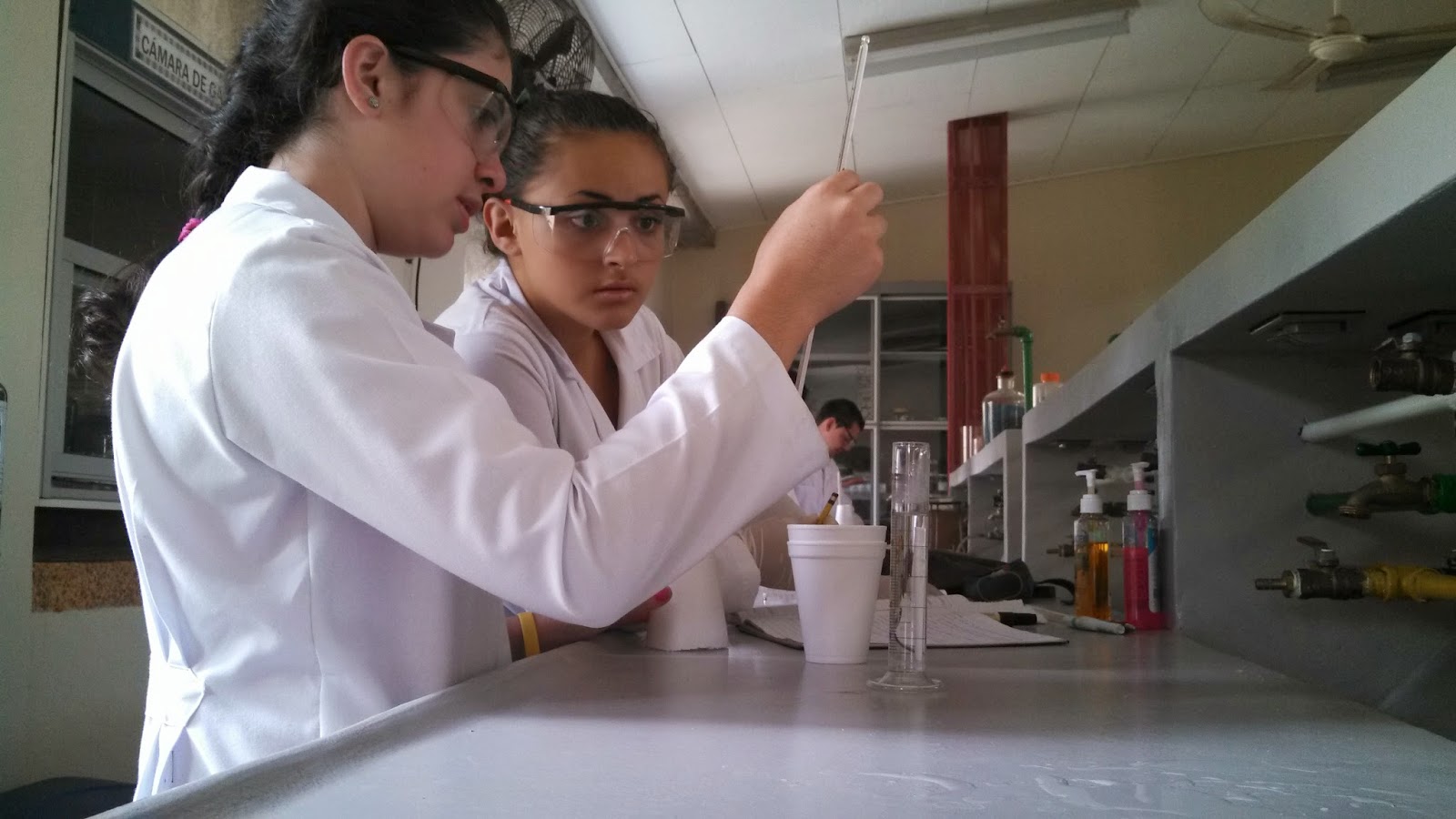
UTN chemistry lab - I was a teacher's aid!

Assistant and photographer at UTN extension events - this was the dairy production seminar
Practically serving as an “intern” to the extension and social action office at the university, I was given various small tasks (and sought out my own larger ones) to maximize my time and investments. I helped with several tours and high school events, observed agricultural classes, and assisted in a chemistry lab. I did get to teach students – high schoolers – about agriculture. Yet I didn’t feel as though I was leaving an impact or nearly closely working as diligently as I had at Wellsboro.

Upon request, I was able to work with a local rural primary school and, therefore, interact with youth in another capacity. After just 4 weeks of simply volunteering in the classroom and planning a community event for these kids, I found that they were quite fond of me. I received several letters and notes, in addition to hugs and “don’t leave”s when I said goodbye this morning; there arose again that feeling of achievement of being a “teacher” and positively impacting the lives of students, even if I didn’t formally teach much of anything to these kids. I am continuing to learn about the impact that educators have on youth.


Lesson about agriculture for 5th/6th graders!

Public community event - Earth day - with the kiddos: A successful culmination of many efforts!
The entire school! Escuela La Balsa will always have a place in my heart
Here, at the end of my two-part student teaching experience, I reflect and can state that there have been several unique opportunities, many challenges, and countless revelations of what I desire to do with my life. Student teaching is about testing the waters to see if we are meant to be educators. It is also an internship in which, given the chance, we can experiment with other career opportunities. But student teaching, above all, is just another life opportunity to love and serve others. I pray that my student teaching experience was as much of a reflection of this life task as I had hoped. I pray that the students I encountered feel just a little bit more valued and maybe, just maybe, that they learned something about agriculture. After all, I have the best job in the world: being an agricultural educator.

Wednesday, April 23, 2014

Secondary Agricultural Education in Costa Rica: my research

As an agricultural and extension education major and international agriculture minor, I find much interest in global agricultural education. Having been given the opportunity to travel to Costa Rica for three separate educational experiences during my undergraduate education, I am fortunate to have been able to collect information about global agricultural education in the country. This blog post is devoted to describing secondary agricultural education in Costa Rica - specifically, I will reflect upon the data collected from my case study investigation of secondary agricultural education in the Central Valley county (canton) of Turrialba, Costa Rica.

Introduction, purpose, objectives
The investigation of secondary ag ed in Costa Rica began over 2 years ago, when I received a grant to conduct undergraduate honors thesis research abroad. So, in addition to my Spanish for the Ag Sciences immersion experience in May of 2012, I remained in Costa Rica for 2 weeks of June 2012 to spend time in and collect data from local schools that have ag ed programs. What follows is a summary of my entire undergraduate honors college thesis, which completely lays out a thorough description of Turrialba ag ed programs, specifically with focus on the following purpose and objectives:

The purpose of the study is to describe secondary agricultural education programs in the Central Valley canton of Turrialba, Costa Rica. The following research objectives guided the study:
  1. Describe secondary education in Turrialba, Costa Rica
  2. Describe agricultural education provided in secondary education in Turrialba, Costa Rica
  3. Describe perceptions of administrators, teachers, and students of agricultural education in Turrialba, Costa Rica. 
Background information
Education is of major importance in Costa Rica, reflected by over 6% of GDP expenditures and almost a 100% school attendance rate. The agricultural industry is of vital significance to the economy of many rural towns of Costa Rica, especially in the fertile Central Valley - where almost half of the labor force is involved in agriculture. Evaluation and discussion of secondary agricultural education in Costa Rica, however, is not extensively recorded. 

An agriculture classroom with the instructor lecturing from a book
Case studies are developed, using multiple data sources, on populations not commonly analyzed. The purpose of this case study was to compile a general description of secondary agricultural education programs in the Central Valley town of Turrialba, Costa Rica. 

Data collection
Data was collected to: describe the scope of the schools; discuss curriculum standards and courses; and assess perceptions of agricultural education by administrators, teachers, and students. Data collection methods included interviewing (informal, semi-structured, unstructured), observations (simple and participant), physical artifact collection (student statistics, curriculum standards), and photographs (of school structures and student work environments). 

Results
Of the many secondary schools in Turrialba, two offer agricultural education courses. The Liceo Experimental Bilingüe de Turrialba (LEB) which directly translates to “Experimental Bilingual High School of Turrialba,” is a 5-year semi-public school with emphasis on English courses. Students graduate with a general high school diploma (bachillerato) and proficiency in the English language. The agricultural education program is a secondary focus of LEB instruction and includes mandatory agriculture courses for students’ first three years. The one agricultural teacher at LEB does not have mandated curriculum because the option to have an agricultural program is under the discretion of the principal, not the government. In addition to lacking curricular resources from the government, LEB agricultural education is limited by a lack of resources and space for experiential learning in agricultural education.

The only agricultural facilities present at the time of study in LEB - some planting beds and work areas (not much in use)
The Colegio Técnico Profesional Agropecuario de La Suiza (CTP), which directly translates to “Professional Technical Agricultural High School of La Suiza,” is a 6-year public school that offers a specialty technical degree to graduates in addition to the 5-year bachillerato. Students take electives for the first three years before selecting a specialty area for the final three years. Three of the five specialty degree areas offered at CTP relate to agricultural science. There are twelve teachers of agricultural education at CTP, dispersed evenly within the three agricultural specialty areas: agroecology, agricultural production, and food processing (agroindustry). Teacher backgrounds vary with regard to universities and past experience but generally reflect the teachers’ instructional area. Agricultural curriculum at CTP is mandated by the government’s education ministry (MEP) because of the school’s national technical affiliation. Curriculum standards exist for both the exploratory years (1-3) and technical years (4-6) of CTP. Agricultural facilities at CTP are expansive and include: a large farm with gardens, dairy, poultry, and goats; a forest farm; and a small farm with rabbits and poultry processing areas. The following photos are all of CTP students and facilities. 

Several animal husbandry facilities allow students at CTP to have much experiential learning opportunities

The CTP facilities are diverse and include a large organic garden

8th grade students in a plant science elective work outside to plant plantain cultivars

Students of the agroindustry specialty area prepare foods for their practical exam

Students in a 7th grade exploratory elective class are butchering chickens they raised

Summary and recommendations 
Perceptions of agricultural education are positive, yet enrollment is a concern. Generally, people recognized agriculture as being important to the community and nation, but were not as knowledgeable of the connection between agricultural education and workforce growth. There was, however, a noticeable lack of interest of students who are taking agricultural courses to pursue agricultural studies or careers. Additionally, retention in agriculture programs and school in general seemed to be of concern. Therefore, recommendations are as follows:

Local Turrialba students who are interested in a career related to agricultural sciences should pursue study at CTP due to its strong agricultural education program and resources. Recruitment programs in secondary agricultural education should be better identified and established in order to make aware the secondary educational opportunities of agricultural science in the Turrialba region. The economics and career opportunities in agriculture should also be exposed to students who are selecting their secondary education experience. Proposed improvements of the education system therefore include: strengthened recruitment and retention programs, promoting agricultural job markets to students entering secondary education, and greater resource provision for agricultural experiential learning.

Further study
Many areas of further study may be pursued to strengthen and expand upon this descriptive research study:
  • Data should be collected at the national level (MEP) with respect to local educational programming: specifically, how local data (needs, economy, etc.) are reflected in secondary education programing.
  • Further studies, similar to this in nature, should be conducted in Costa Rican secondary agricultural education programs in order to develop a greater picture of nation-wide agricultural education. 
  • A study should be developed to more clearly define national-level goals and regulations of agricultural education curriculum and successes. This would be conducted by visiting the Ministry of Public Education, especially the professional technical sector, and gathering data through interviews with national administrators. 
  • In relating occupational opportunities and agricultural education, research should be conducted to identify the career or post-secondary decisions of Turrialba agricultural education graduates. These decisions will better develop an understanding of the preparatory nature of secondary agricultural education in Turrialba. 
  • A descriptive study of recruitment and retention in agricultural education programs should be developed to understand perceptions of students who either decide to enroll in agricultural education or drop out from current programs. 
  • Perspectives of secondary agricultural education should be gathered from the following parties: 
    • Parents and families of students involved in the educational programs 
    • Individuals in the local agricultural industry 
    • Individuals in higher agricultural education. For example: professors, researchers, administrators at post-secondary institutions of agriculture in Costa Rica. 
    • Recent graduates of the agricultural education programs in the study, both in post-secondary education and the workforce, to qualitatively measure the successes of the programs in the study. 
    • Third party community members who are not directly connected to secondary agricultural education or the agricultural industry to develop a greater understanding of the community’s awareness and value of agricultural education. 

Summary and reflection
While I only have been able to capture a snapshot of secondary agricultural education in the world, I still have a broader view of its diversity. More importantly, I am thankful for the ability to see how education can and should reflect industry and workforce needs. I appreciated the chance to work with the students and hear from them, a potential indicator of the superb student teaching experience I had while teaching students in Wellsboro. While I sadly could not complete my Costa Rica student teaching experience at the CTP school, I know I will always remember it as one to be admired when it comes to experiential learning in agricultural education. 

There are still a hopeful amount of individuals interested in agricultural sciences in Costa Rica - at least from what I have observed and come to know during my 3 agriculturally-related experiences here. I now have visited 2 primary schools, 3 secondary schools, and 3 universities in Costa Rica and have grasped a bigger picture of education in the nation. From these experiences, I have developed an increased interest in how educational systems and agricultural education functions around the world and hope to continue to build on to my experiences in Costa Rica to contribute to the global definition of agricultural education.